

INTRODUCTION
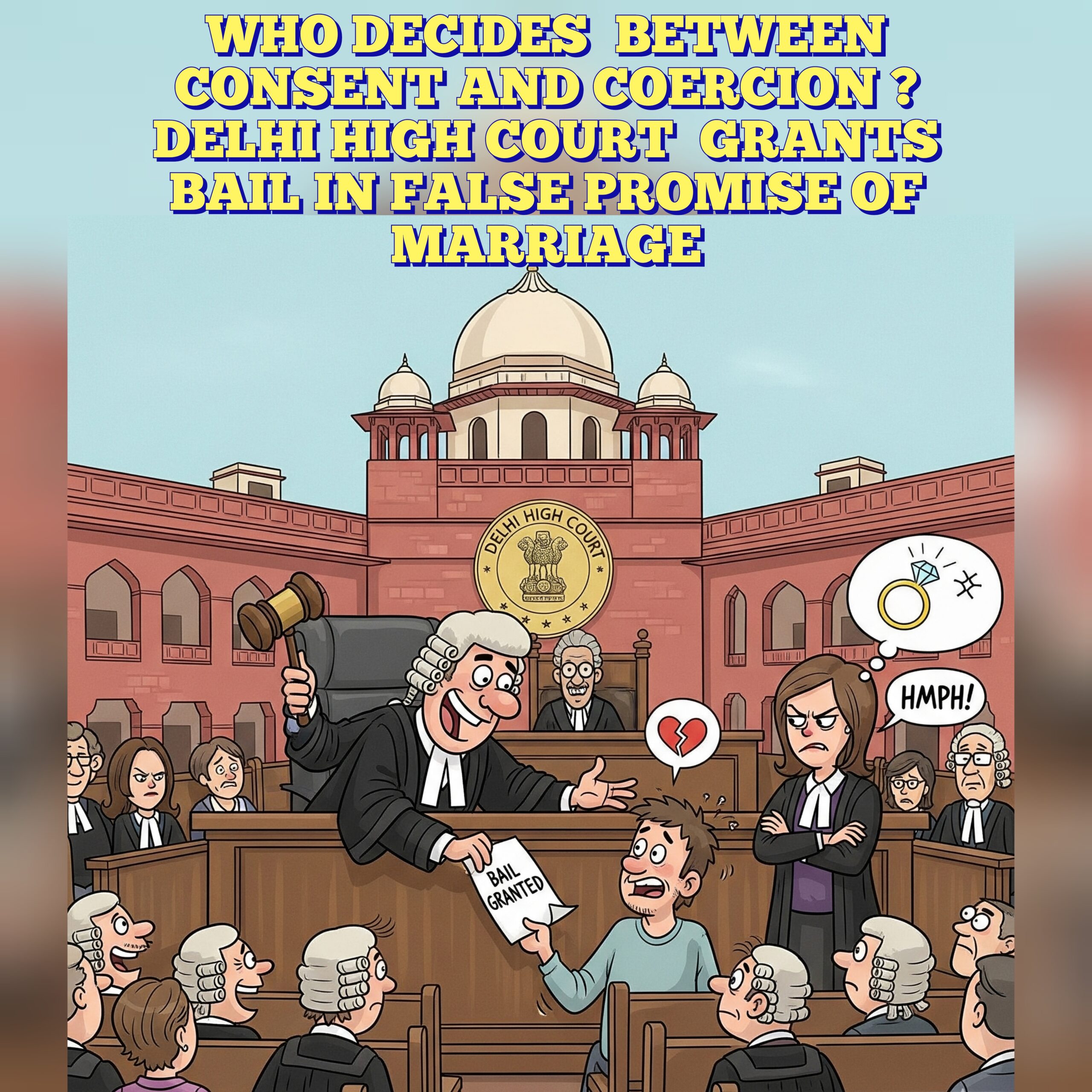
On September 21, the Delhi High Court allowed bail to a Sikh Man who was accused of rape under Section 69 of Bharatiya Nyaya Sanhita ( BNS). The allegation was that the accused had a sexual relationship with the complainant, misleading the promise of marriage. This decision reflects the balance between safeguarding victims and also avoid misusing of rape laws.
BACKGROUND OF THE CASE
A Sikh man and muslim woman have been in a relationship since 2021. As per the statements of the complainant the accused made a marriage proposal and gave assurance of marriage. Later they engaged in physical relationships in the promise of marriage. They went for vacations and she brought him before her family, strengthening their relationship.She claimed that she had relationships with other persons. He compelled her to have unnatural sex and recorded their intimate moments without her consent.
ARGUMENTS OF THE PARTIES
The petitioner (Accused) pointed out that their relationship was mutual which lasted over 3.5 years. Also as they came from 2 different religions the marriage was uncertain. As there physical relationship was consensuall there is no case of rape and she is a adult to know about all these things. The case was also filed by the complainant following the conflicts that arose in their relationships.
The defendant (State/Complainant) argued that it clearly defines the petitioner made a fake promise of marriage and used her in that promise. The state opposed giving bail to the accused and concerns were raised about tampering evidence and the complainant being intimidated.
COURT’S OBSERVATION
The Delhi High Court observed every single allegation in this matter and pointed out that the both persons are adults and they have the capability to take decisions and understand and consenting to their actions. The court finds out that the relationship seems to be mutual and voluntary. The court also pointed out that in many of these cases emerge when there is any disagreement in the relationship. While on taking decisions in this matter, the court also pointed out that there need to ensure protection of women against violations and also prevent the misuse of legal provisions in the situations of breakdown of relationships.
CONCLUSION
The Delhi High Court granted bail to the petitioner and pointed that the investigation will continue without any interference. This decision reminds that in some cases men also need fairness in these types of matters. The court must take strong decisions on genuine cases. Both of them are adults and they are capable and know what their actions are. This decision highlights the difference between consent given under pressure and conflicts arising out of failed relationships. The court must carefully approach these sensitive matters and allegations and take strong decisions accordingly.
AUTHOR DETAILS:
Aswathy S Menon, a law graduate from Mar Gregorios College of Law, Thiruvananthapuram, and Practicing as a lawyer at High Court of Kerala with over two years of experience in litigation, compliance, and legal research. She has contributed to legal content writing and worked on civil, criminal, and corporate matters, with particular interests in corporate governance, contract law, and dispute resolution.