

INTRODUCTION
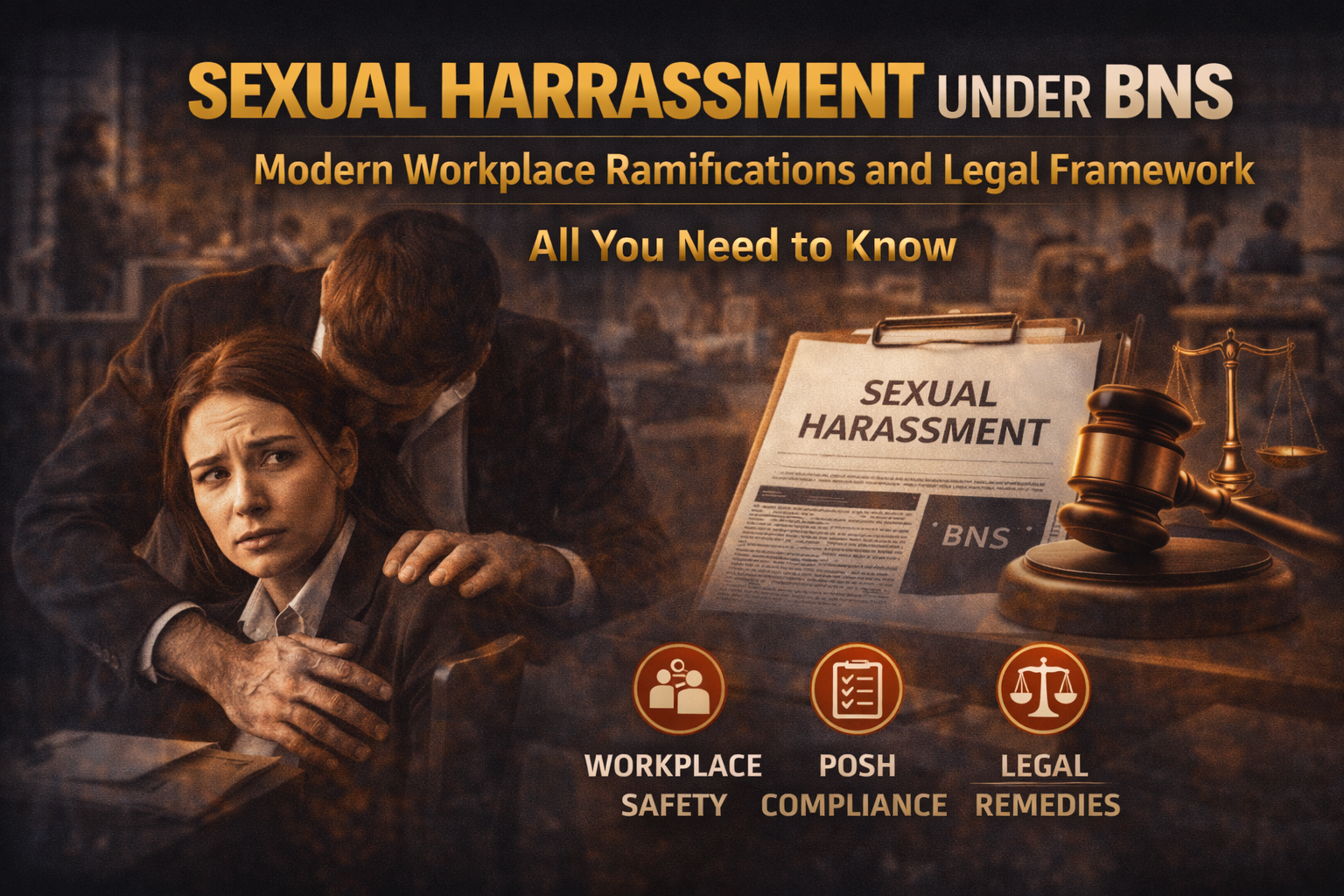
A safe and dignified workplace free from harassment is important for ensuring equality and professional growth. Awareness about harassment have been increased among employees which helps in ensuring accountability for misconduct at workplace. Understanding Sexual harassment under BNS defined in Section 75 helps in protection and safety in modern workplace. The new criminal law framework address workplace harassment and reflect the need to protect employee from abuse of power by higher authority and also provide remedy for harassment. Bhartiya Nyaya Sanhita introduced modern legal framework that strengthens protection against sexual harassment at workplace. Legal awareness about sexual harassment among employees and employers is essential for ensuring safety, accountability and workplace dignity. This article explains new criminal law framework in relation to sexual harassment at workplace, implications and workplace relevance of sexual harassment under BNS and also responsibilities of employers and employees and I have explained everything about Sexual Harrasment under BNS.
EVOLUTION OF SEXUAL HARASSMENT LAW IN INDIA
The recognition of sexual harassment as a legal issue developed in India through judicial intervention and reforms. Judicial interventions and policy reforms played an important role in emphasizing dignity, equality and safe working conditions at workplace. In India, until 1990 there was no specific law governing sexual harassment at workplace and workplace harassment was dealt under general criminal law provisions relating to assault. A major turning point came through judicial intervention by the Supreme Court in the landmark Vishakha v. State of rajasthan,1997 , Supreme Court recognised sexual harassment at workplace as a violation of fundamental rights, especially Right to equality and Right to dignity. Court recognised sexual harassment as violation of human rights and laid down guidelines which required employers to provide safe working environment and establish complaint mechanisms. This guideline later influenced modern criminal law provisions dealing with workplace sexual harassment.
LEGAL FRAMEWORK OF SEXUAL HARASSMENT UNDER BNS
Sexual harassment under Bhartiya Nyaya Sanhita means unwelcome physical conduct, any demand or request for sexual favours, showing pornography against the will of woman and making sexually coloured remarks constitute to offence of sexual harassment.
Any unwelcome conduct sexual in nature by male employee or employer at workplace which violates the dignity and personal autonomy of woman will be considered as sexual harassment at workplace. The offence of sexual harassment also includes unwelcome physical contact, making inappropriate comments over body, gestures and sending offensive messages through emails or any social media platform.
Workplace harassment can take place during performing official duty, work-related meetings, or professional communications, it can be both physical and virtual. Sexual harassment at workplace not only affects the personal autonomy and dignity of woman but it also harms professional environment and equality at workplace.
The new criminal law framework ensures that workplace should be safe, protected and free from misconduct because when such act occurs it creates inequality, fear and discomfort among employee and employer.
ESSENTIAL INGREDIENTS OF THE OFFENCE
To constitute the offence of sexual harassment under BNS following essential ingredients must be present: –
Unwelcome sexual conduct
There must be unwelcome sexual conduct by a man towards the woman. The conduct can be physical contact, verbal such as sexually coloured remark, inappropriate gestures, or offensives messages through online platforms.
For example: – Touching or holding body part of woman without her consent
Intent or nature of behaviour
The behaviour should be sexual in nature and capable of being perceived as offensive. The intention of offender must be to engage in sexual favours that violates the personal dignity of woman.
Lack of consent
Absence of consent is most essential element of sexual harassment. It means the conduct must occur without free and voluntary consent of victim.
For example: – showing pornography against the will of woman
Impact on the victim
The act should result in violation of dignity of woman, mental stress and create discomfort at work environment. The impact on victim is must for determining the offence of sexual harassment.
For example: – The act causes fear and discomfort for woman at workplace
Workplace relevance
The conduct must affect personal dignity and equality at workplace. Workplace harassment affects the professional participation and creates fear and discomfort among the peoples.
For example: -misconduct by superior authority creates unsafe environment
Punishment
Bhartiya Nyaya Sanhita describes different punishment depending on the nature and seriousness of the conduct. When behaviour violates personal dignity and autonomy, the wrongdoer will be subjected to criminal liability. Law ensures that harassment is not merely personal wrong but it affects equality and safety at work environment.
The act provides for imprisonment, fine or both based on the type of harassment. Acts like physical contact and advances, demand or request for sexual offers and displaying pornographic material against the will of the woman may lead to rigorous imprisonment up to three years, a fine, or both. For making inappropriate comments or remarks of a sexual nature, punishment may extend to one year imprisonment, fine, or both.
The objective of punishment is based on deterrent theory. The purpose of punishment is to prevent future violations of human rights of a woman and promote safe and respectful workplace environment. The modern legal framework under BNS emphasizes equality, respect and accountability at workplace.
Compared to earlier legal framework, sexual harassment was punished under Indian Penal Code, the BNS also continues to recognise the offence of sexual harassment as serious offence focusing on dignity and autonomy of woman. Aggravated forms such as misuse of power and authority, repeated misconduct and conduct causing harm will lead to stricter consequences and greater criminal liability may arise.
Sexual Harassment under BNS in modern workplaces
In digital era, the nature of workplace has changed with the growth of technology. The growth of remote work has changed professional environment. Modern workplaces are not limited to traditional offices it has transformed and now includes remote work, online communication and video meetings. Professional work take place through emails, video calls, and digital platforms because of which sexual harassment may happen through video calls, emails or messaging platforms.
The informal and friendly interaction in many corporate and startup workplaces may sometime cross professional boundaries. Employees in internships and gig-based role work without strong protective mechanisms, due to lack of organisational safeguards they may experience vulnerability. Power imbalance between senior and junior, employee and employer, or intern and mentor can result in workplace harassment. When there are power differences at workplace the risk of harassment becomes higher.
Under Bhartiya Nyaya Sanhita, harassment may arise through unwelcome and explicit physical contact, inappropriate digital communication, misuse of power by authority, or misconduct in professional work. The law recognises that dignity and safety should be protected at workplace whether physical or digital, to ensure equality.
Employer responsibilities
A safe workplace is employer’s responsibility. Employers have a legal duty to provide a safe workplace and ensuring safe working conditions for all. Employer must establish complaint mechanism where employees can file harassment report without fear.
Employer’s responsibilities include: –
- Implementing preventive policies.
- Conducting regular training programmes.
- Ensuring clear reporting procedures.
- Promoting dignity and respect.
This all are essential for promoting awareness and accountability.
Internal awareness among employees helps in creating a respectful environment at workplace and reduces risk of harassment. Transparent reporting procedures and speedy action against misconduct stabilize trust and uphold workplace dignity. Awareness within the organisation is important to stop inappropriate behaviour and protection of employees.
Interaction between criminal law and workplace compliance
Workplace inquiries and criminal proceedings functions separately but may run simultaneously. Internal workplace committees examine violations of professional conduct. Workplace mechanism focuses on service rules and institutional accountability. It also provides immediate remedies to the victim.
While criminal law determines legal liability and addresses offence against dignity. Criminal law deals with punishment for the sexual harassment. In many cases both processes run parallel to ensure accountability with affecting each other. Employers must cooperate with legal authorities and they are obliged to handle complaints properly, supporting victims, preserving evidence and ensuring fair process.
This system helps in promoting accountability, protecting employee’s dignity, strengthening trust in workplace governance and enhancing organisational integrity. It also strengthens legal enforcement.
Impact on employees and organisations
The legal recognition of sexual harassment under BNS affects both employees and organisations. The legal framework gives stronger protection to employees against sexual harassment by recognising sexual harassment as a punishable offence under Bhartiya Nyaya Sanhita. By clearly defining unwelcome conduct and providing legal remedies, the law empowers employees to understand their rights and seek protection against sexual harassment at workplace. Organisations are required to ensure safe and dignified workplace for employees. Compliance with law protects employees and also strengthens organisational integrity and accountability. The combined effect of employees and organisations promote safety, dignity, and accountability within professional environments.
Impact on employees: –
- Stronger legal protection: – Employees get strong protection against sexual harassment under the Bhartiya Nyaya Sanhita.
- Confidence to report: – Legal recognition of the offence of sexual harassment promotes confidence to report misconduct and encourages victims to report it without fear.
- Awareness of rights: – Employees become more aware about their rights and workplace behaviour. Awareness enables employees in identifying inappropriate behaviour and seeking remedies through organisational mechanism and criminal law.
- Access to remedies: – Access to complaint mechanisms and legal remedies promotes dignity, equality, and respect at the workplace. Victims can seek relief through internal mechanism as well as criminal process.
Impact on organisations: –
- Legal responsibility: – Organisations are responsible for ensuring a secure and respectful environment at workplace.
· Effective Policies: – Organisations are required to implement anti- harassment policies and preventive measures.
· Organisational obligations: Organisations must establish proper complaint mechanisms and reporting procedures.
· Organisational trust: – Proper mechanisms at workplace for reporting sexual harassment enhances organisational credibility and integrity.
· Awareness: – Organisations are responsible for promoting awareness about sexual harassment and providing fairness.
Impact on employers
Bhartiya Nyaya Sanhita has criminalised sexual harassment and it also employers responsible for any misconduct. Employers are responsible to compliance with law and prevent misconduct. If employers fail in performing duties, they will face legal consequences and reputational harm. Employers have important role in maintaining safe workplace environment. They are responsible for:
- Complying with legal requirements to ensure safe working conditions and implement institutional procedure.
- Preventing workplace harassment bytaking protective measures and monitoring misconduct.
- Implementing anti-harassment policies and preventive measures in workplace guidelines that define misconduct and procedures.
- Providing training and awareness programmes for employees and management so that they get to know about their rights and remedies.
- Managing their reputation by taking harassment complaints. It they fail, this can harm their reputation.
Challenges in implementation
Despite legal provisions of sexual harassment under Bhartiya Nyaya Sanhita, its effective implementation in workplace is real world issues. Lack of awareness among employees result in delaying report and proper enforcement. Protection cannot be guaranteed by legal provisions alone unless they are properly enforced and institutional mechanism. These obstacles make it difficult to reduce the effectiveness of legal protection and have a safe workplace.
The major challenges include: –
- Underreporting of cases because victims hesitate to report sexual harassment because they fear adverse effects and professional humiliation.
- Fear of retaliation from employers. Workers may fear job loss and mistreatment after filling case of harassment.
- Lack of awareness among employees about legal rights and complaint procedures.
- Procedural delay in enforcement at both institutional and criminal process reduces effectiveness of remedies.
- Concern regarding misuse of provisions may affect organisational response and enforcement.
Judicial and policy implications
The courts play an important role in interpreting the scope of workplace dignity and provisions of sexual harassment under BNS. Judicial interpretation clarifies the scope of offence and protects dignity and equality at workplace. Judiciary contribute in development of workplace safety standards by setting principles for fair enquiry, victim protection and accountability of employers.
There is a need for sensitive enforcement of law relating to sexual harassment for protecting victims from harm and ensure fairness in criminal proceeding. Policymakers and judiciary must balance enforcement with safeguards against misconduct to maintain trust in legal proceedings. Future legal developments need to focus on awareness, improving organisational mechanisms, protecting victims, enhancing internal procedure and modifying laws to reflect changing workplace conditions.
Critical Analysis
The Bhartiya Nyaya Sanhita strengthens legal protection by recognising sexual harassment at workplace as a punishable offence in modern criminal law framework. Punishing different forms of misconduct and emphasising accountability, law reinforce importance of safe and dignified workplaces. However, effectiveness of protection not only depends on legal provisions but also on awareness, employer compliance, access to remedies, and proper enforcement of institutional rules.
Despite legal recognition, difficulties affect the enforcement of law. Underreporting of case, fear of losing job, lack of awareness about rights, professional pressure and procedural delay lessen the impact of legal safeguards. Many victims do not initiate complaint due to fear of retaliation. Therefore, implementation gap is a significant concern in ensuring protection against sexual harassment at workplace.
Effective legal framework depends upon both institutional response and corporate compliance. Employers have to adopt policies, conduct training programmes and establish complaint mechanisms to provide safe, dignified, and respectful workplace. Without awareness and enforcement, law alone cannot achieve objective of protecting workers at workplace. The framework requires cooperation of criminal institutions and organisational governance.
Conclusion
Bhartiya Nyaya Sanhita establish legal protection against misconduct at workplace. Protection from sexual harassment is crucial for workplace equality and safety. Cooperation between criminal law enforcement and organisational compliance is required for law to be applied fully. To ensure that employees are protected, legal awareness, immediate enforcement, and institutional response are important crucial. The framework of sexual harassment under BNS is crucial for ensuring dignity, safety, and accountability in modern workplaces.
About Author
This Article has been written by Saloni Mandloi, an LLM student at Institute of Law and Legal Studies at Sage University, Indore, who is building her career in legal writing and research. She has particular interest in Criminal Law, Gender Justice, Victim Rights and Constitution Law. Saloni discuss and explain current legal issues from student’s point of view. She present her ideas in simple and understandable way for readers.
FAQs
- What is sexual harassment under BNS?
According to BNS unwelcome sexual physical contact that violates the dignity and autonomy of a person is defined as Sexual Harassment. It includes physical advances, demand for sexual offers and showing pornography.
- What is punishment for sexual harassment under BNS?
Punishment depends upon the type and seriousness of act, it can be in form of imprisonment, fine, or both. The aim of punishment is deterrence, accountability and preservation of dignity.
- Does BNS apply to workplace harassment cases?
Yes, BNS apply when workplace misconduct amounts to criminal offence under the law.
- Can internal complaint and criminal case be filed together?
Yes, workplace can conduct internal enquiry and criminal complaint can be filed at the same time. These proceedings run concurrently.
- How does BNS affect modern workplaces?
The framework strengthens legal accountability and provides safe and respectful environment at workplace. It promotes cooperation between workplace compliance system and criminal law enforcement.