

Introduction
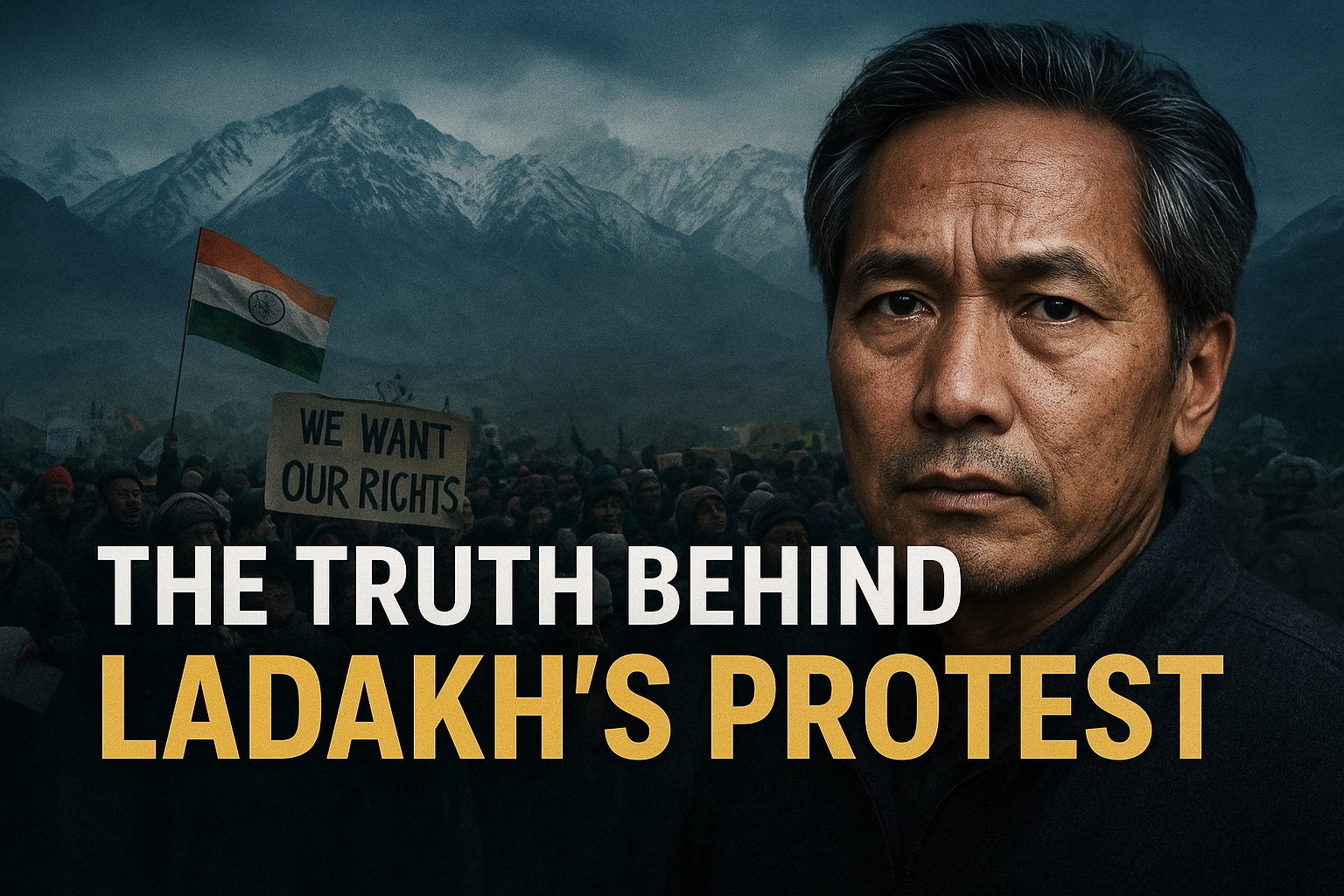
Ladakh is one of the union territories of India that has been gripped by unprecedented unrest as demand for the constitutional safeguard turned into a region wide movement. At the centre of this crisis, the climate activist Sonam Wangchuk has been arrested under the National Security Act (NSA) that has triggered the nationwide debate highlighting the demand and the ongoing struggle for identity and environmental protection.
Background of the protest
The roots of the protest lie’s in Ladakh long standing demand for statehood and inclusion under the Sixth Schedule of the Indian Constitution. The demand of the people of Ladakh for the reason to safeguard the tribal culture and traditional way of life from unregulated industrial projects and political neglect. In this protest the role of Sonam Wangchuk came up as the face of the protest. He is globally known for his innovation in sustainable technology and climate activism. Sonam Wangchuk through peaceful protests brought national and international attention to Ladakh’s demands. Supporters of Sonam see him as the voice for the voiceless while the authorities allege that his speeches risked inciting unrest.
Event Leading to the Arrest
On 27th September,2025 police detained Wangchuk in Leh as he prepared for a press conference. The arrest has been done by the NSA that allows the authorities to detain him without trial for up to a year on security grounds.
Days earlier the union home minister had revoked his NGO’s license under the Foreign Contribution Regulation Act (FCRA) stating the financial irregularity in the accounts. This compounds the tension as protests change into violence, resulting in four deaths and more than 80 injured and the network and internet were suspended in the area and BJP’s Leh office was set on fire showing the anger of people of Ladakh. The protests have left deep social and political scars and postponed crucial dialogue between the centre and regional groups such as Leh Apex Body (LAB) and the Kargil Democratic Alliance (KDA).
What is Sixth Schedule Demand
The Sixth Schedule demand from the people of Ladakh provides tribal- dominated regions with autonomous district councils to manage land, natural resources and cultural practices. Since 2019, Ladakh has been given the title of Union Territory and many locals feel politically sidelined without sixth schedule protection. The primary concern of the people is exploitation by corporate interests and environmental degradation in regions already vulnerable to climate change.
Conclusion
The rise of protest in Leh Ladakh and the arrest of Sonam Wangchuk is more than a legal case; it shows Ladakh’s struggle for identity, representation and environmental protection. In this protest and arrest the central question persists- Will Ladakh gain the constitutional safeguard it seeks or will unrest continue to define its future?
About the Author
Tushar Kumar is a final-year BBA-LLB student at Guru Gobind Singh Indraprastha University. With a strong interest in Intellectual Property Rights, he enjoys exploring how law interacts with innovation and creativity. He’s equally passionate about legal writing, Research and believes in making complex legal ideas easier to understand through clear articles. Tushar continues to deepen his understanding of the law while contributing thoughtful pieces on contemporary legal issues.