

INTRODUCTION
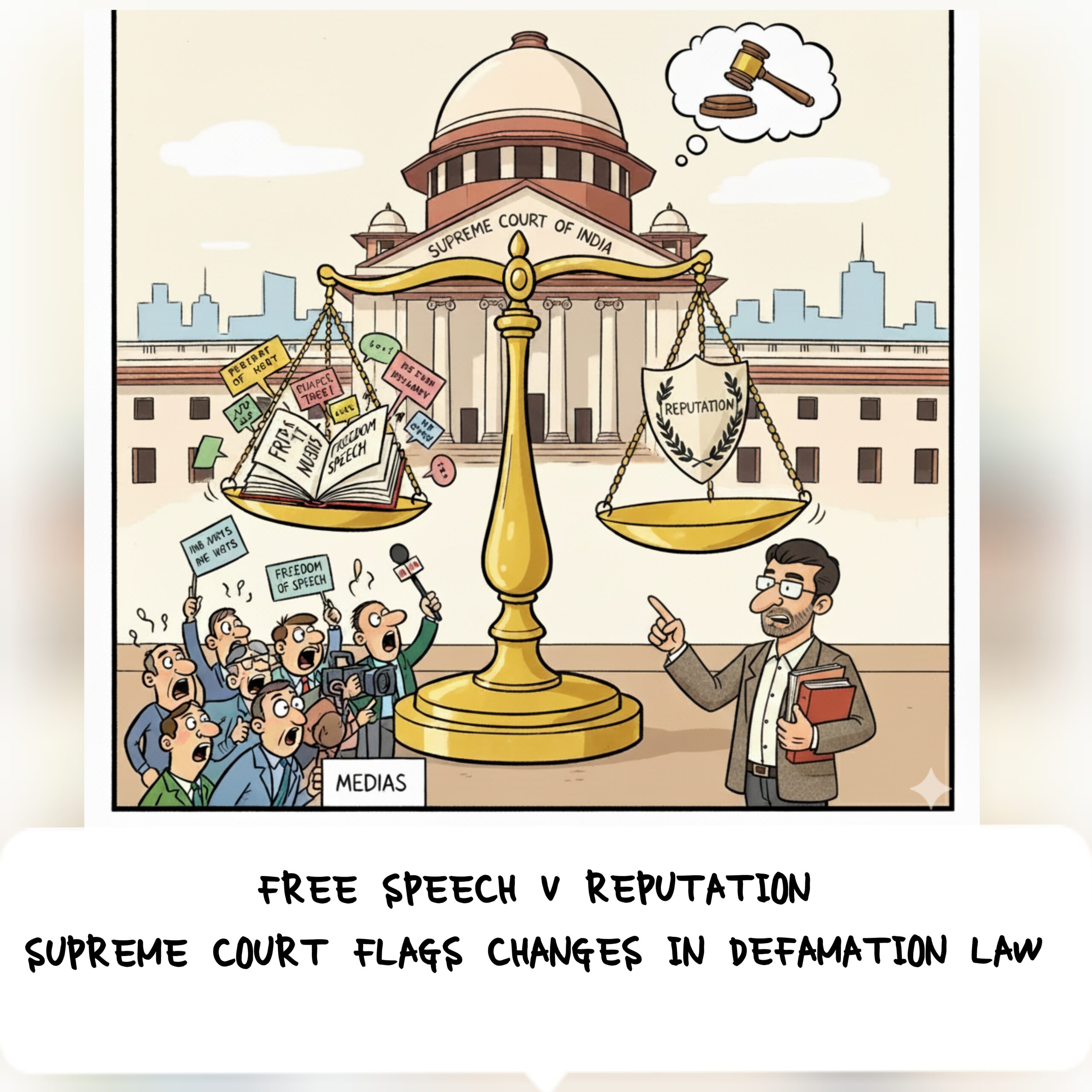
On September 22nd the Supreme Court of India made a notable observation that may influence the future defamation law in India. The Court said the time had come to decriminalize defamation. The bench made the oral observation during a plea filed by “The Wire” against criminal defamation proceedings initiated by a professor of JNU.
BACKGROUND OF THE CASE
The case begins when a defamation case is filed against a media portal “ The Wire” in relation to an article published by them. The article stated that a Professor named Amita Singh, a JNU faculty member led a group of teachers who allegedly compiled a 200 – page dossier which describes JNU as a “ den of organized sex racket” and as a hub of “secessionism and terrorism.” Professor Amita Singh denies these allegations by the media on the involvement in the dossier. He filed a defamation case against the media portal. The Trial Court issued notice to “The Wire” regarding this allegation. Later the Delhi High Court upheld the case. The Wire filed a plea before the Honourable Supreme Court for contesting the summons issued by the trial court sessions. They alleged that the criminal defamation laws were misused and suppressed journalism.
COURT’S PROCEEDINGS
In the year 2017 the trial court first issued summons, later the supreme court intervened in the year 2024 and sent the matter back for reconsideration. The fresh summons were issued in the year 2025, which were then upheld by the Delhi High Court in May 2025. The Supreme Court is now reviewing the case again. The court during the hearing said that “ the time has come to decriminalize all this”. The court pointed out that the defamation case should not result in criminal punishment and can be dealt with civil matters. The bench also noted that these procedures took a long time to resolve it. In most of these cases the law will be misused and discouraged media expressions.
CONCLUSION
The above defamation case has been linked with some other defamation matters by the court. In the connected matter there include Rahul Gandhi’s case. The Supreme Court ‘s major remark could have significant influence on the press freedom and expression in India. If defamation is criminalized there should not be criminal punishment in the cases related to defamation. Also the media and press will get protection regarding these matters. This could be the moment the people of India rethinks the balance between reputation and expression.
AUTHOR DETAILS:
Aswathy S Menon, a law graduate from Mar Gregorios College of Law, Thiruvananthapuram, and Practicing as a lawyer at High Court of Kerala with over two years of experience in litigation, compliance, and legal research. She has contributed to legal content writing and worked on civil, criminal, and corporate matters, with particular interests in corporate governance, contract law, and dispute resolution.