

Introduction
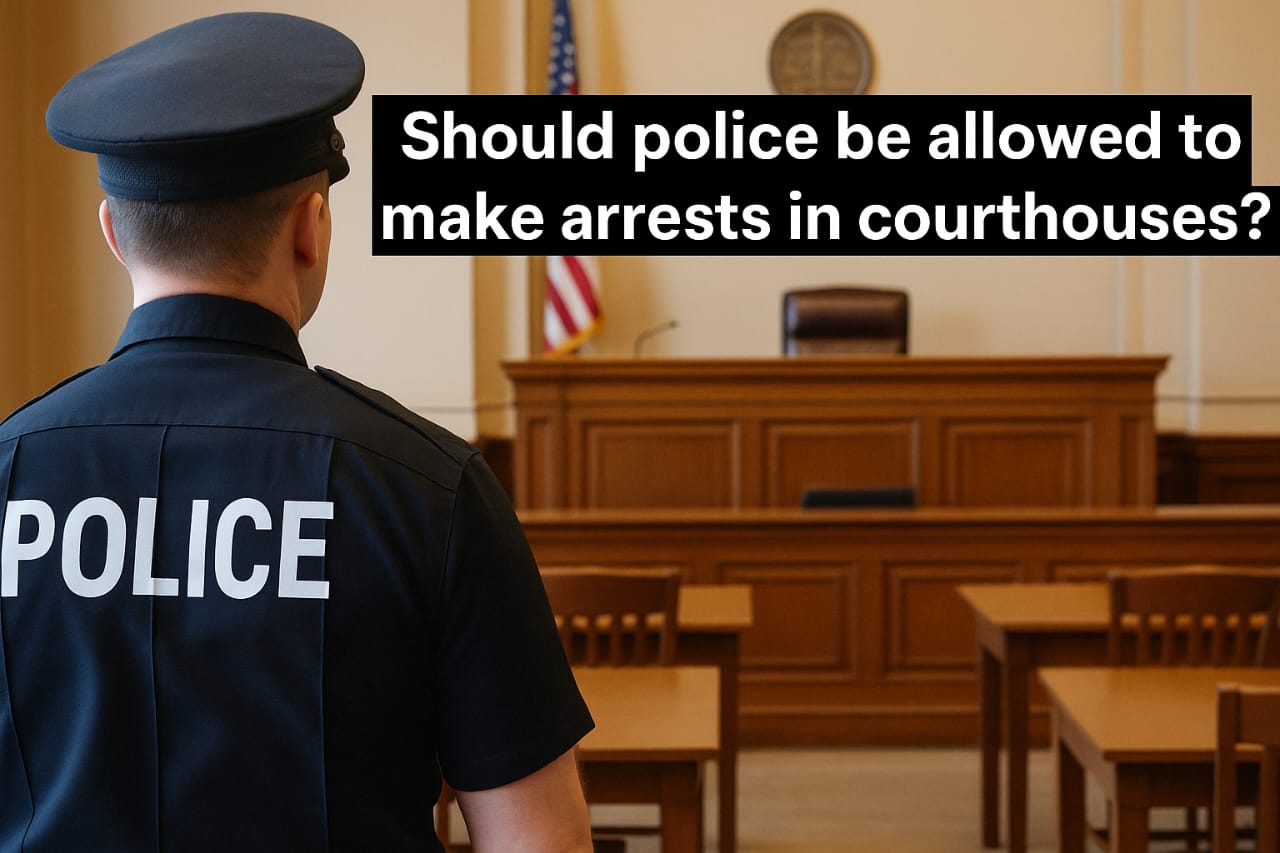
The Kerala Police Officers’ Association has moved the Supreme Court against the Kerala High Court’s recent guidelines restricting Arrest of advocates in court premises arguing that the order hinders law-enforcement operations and amounts to judicial overreach. The apex court has issued notice and sought a response from the State of Kerala.
What the High Court Guidelines Say about Arrest of advocates in court premises
In August 2025, following a suo motu case arising from clashes between lawyers and police at a court in Alappuzha, the Kerala High Court directed that ‘arrests in court premises’ during court hours are permitted only in two situations:
(i) when immediate action is required to prevent a cognizable offence; or
(ii) where an absconding accused must be apprehended under a long-pending warrant.
Otherwise, the presiding judicial officer must be informed before any arrest inside the defined “court premises”.
The guidelines further define “court premises” broadly, covering all connected buildings, structures and land during working hours or while court is in session.
Why the Association Opposes the Curbs
The petition filed by the association argues that the High Court’s curbs on ‘arrests in court premises’ conflict with the procedural regime laid down by the Bharatiya Nagarik Suraksha Sanhita, 2023 (BNSS) and the Kerala Police Act, 2011. The association claims that these statutes already lay down arrest powers and procedure, and that the High Court has effectively engaged in “judicial legislation” by adding a spatial bar on police operations.
The association warns that by broadening the definition of “court premises”, the guidelines may allow criminals to exploit courtroom zones to evade arrest, thereby undermining police investigations.
Supreme Court’s Take on Arrest of advocates in court premises
A bench of Justices Surya Kant and Joymalya Bagchi has taken note of the plea and asked the state to respond. The court remarked that the issue of ‘arrests in court premises’ must be examined in the broader context of ensuring safety and dignity inside courts, pointing to incidents where accused persons have entered court complexes in lawyer robes and committed violence.
Conclusion
Through the dispute one question arises: How to balance the operational needs of the police with the institutional integrity and safety of court environments? Everyone is now looking at the Supreme Court’s decision on how police and courts coexist in India’s criminal-justice framework.