

Introduction
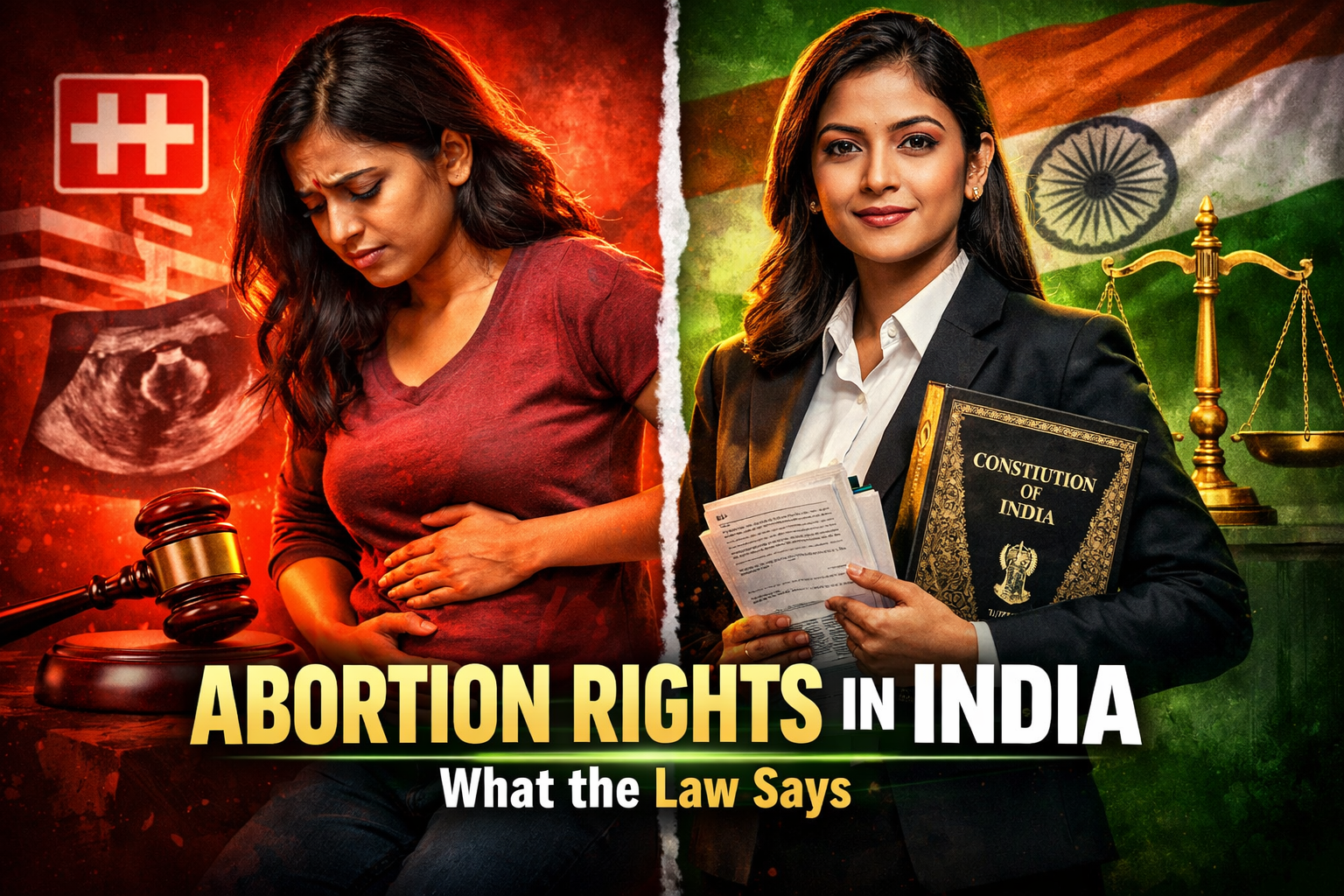
Abortion is not just a legal and medical procedure, but also a personal experience for the millions of Indian women who have to undergo critical and emotional decisions. In fact, the decision of abortion for most of the women is linked to their health, economic conditions, family, and social factors, or even beyond their control. In a country where the discussion of reproductive health is surrounded by silence and taboo, the woman has to undergo the challenge of abortion alone. Abortion is not just a personal experience, as it is also linked to the concepts of self-worth, dignity, and compassion. India has been a trendsetter in the protection and care of its women by legalizing abortion through the Medical Termination of Pregnancy (MTP) Act of 1971. This act came into force with the objective of protecting the women of the country from the hazards of abortion, as thousands of them were dying every year due to such procedures. However, with the advancements of medical science and the development of the country, the legislation had to undergo changes to accommodate the interests of its women, especially the ones who had to undergo sexual assault and unwanted and risky pregnancies. These are some of the legal developments that indicate a recognition of the need for women to be able to make decisions about their own bodies in a safe and enabling environment. It is one thing to have a law in place, but the situation on the ground is always a far cry from what the law provides. There are many women who are afraid of being judged by their community, particularly if they are not married or are from rural areas where there are limited health facilities. Unmarried women, adolescents, and rape victims are also at a higher disadvantage since they are often judged rather than being understood. Therefore, some women are forced to use unsafe means of terminating a pregnancy, even when the law provides for it. The abortion laws in India are also connected to other social issues, such as gender inequality. The misuse of medical science for the purpose of abortion based on the gender of the baby has also created serious social problems, indicating the deep-rooted desire for male offspring. To overcome this, strict laws have been framed, prohibiting the determination of the gender of the baby, thus indicating the intricacies involved in the abortion laws in India, where the right to life of women has to be balanced against the social evil of female infanticide. Abortion laws in India, therefore, represent the trust women must be accorded to make the best decisions for their lives. It requires creating a society that will respond to women’s needs with understanding, not judgment, and a healthcare system that will be supportive, accessible, and non-judgmental. Abortion laws in India, if viewed from the human perspective, reveal the complexities involved in the right to life, where the right to life for women does not only involve laws, but also the capacity for empathy, choice, and the right to live with dignity and in this article the author has explained everything about Abortion Rights in India.
Background and Context of Abortion Rights in India
In most discussions, abortion is considered a legal, moral, or political issue; yet, from a personal perspective, it is essentially a health care and personal autonomy issue. Comparative analysis indicates that abortion policy not only influences legal rights but also directly influences personal realities, particularly for individuals seeking reproductive health care services. Therefore, abortion policy offers an interesting perspective on how states balance personal autonomy, gender equality, and social welfare concerns. In all countries, one pattern has been consistent: regardless of whether abortion is legal, individuals do not have access to care because of considerable distances, provider shortages, cost, waiting periods, and bureaucratic requirements that delay care. These barriers are not neutral; individuals with economic resources, flexible work arrangements, and social support are able to circumvent barriers, whereas those without economic resources, being young, undocumented, or living in rural areas face significant challenges.
Ultimately, abortion policy often decides who has access to reproductive choice, not whether choice is possible. In the USA, the decentralized control of abortion regulation creates stark disparities between geographic regions. Individuals with similar health circumstances may be subject to vastly different regulatory realities depending on their state of residence. In restrictive states, access to abortion services may necessitate extensive travel and financial costs for both patients and providers. For many people, these barriers are not merely inconvenient but also prohibitive. Another common observation of comparative studies is that such internal disparities are uncommon among other high-income democracies. In Western European nations, abortion is commonly regulated within gestational limits and is included in the general health services provided to residents. This minimizes financial barriers and normalizes abortion as a routine health procedure. Of course, additional requirements such as mandatory waiting periods or counselling sessions also underscore the lingering discomfort with abortion as a routine health procedure. In nations where abortion is prohibited or only permitted to protect the life of the pregnant individual, abortion is not absent but is not subject to regulation as a routine health procedure. . Rather, it becomes more dangerous and more isolated. The fear of prosecution may discourage people from seeking medical care when complications arise, and medical staff may wait until legal thresholds are unmistakably crossed before providing treatment. In these settings, abortion law is not simply a set of legal rules; it is a condition of perpetual uncertainty and risk. Comparative research has shown that criminalizing abortion does not stop it; it merely redistributes it. Those who have access may travel or access discreet private care, while those who lack access are more likely to face medical complications or be forced to carry unwanted pregnancies to term. . Places that approach abortion from a public health perspective rather than a criminal one experience fewer maternal mortality rates and negative health outcomes. It is not the principles of law per se that create the human impact of abortion policies but how systems of law allocate safety, risk, and responsibility. In a variety of different laws and cultures around the world, a striking consistency appears. Where abortion is a normal part of the health system, people experience fewer negative effects and more freedom. Where it is a moral issue or a criminal one, the weight of regulation falls on those who have the least control to deal with it.
Law, Policies, and Guidelines Abortion Rights in India
Abortion laws are unique in their interface with criminal law, constitutional law, health laws, and medical ethics. It has been noted that the laws on abortion are diverse and varied across countries. It has also been highlighted that while there are differences in the laws governing abortion across countries, there are also variations in the implementation of laws on abortion at the medical level.
Criminal law and the criminal experience of risk
For many countries worldwide, abortion is still largely subject to criminal law regulation. Even when there are qualifying provisions to protect the life or health of the individual carrying the foetus, criminal law regulation creates a situation of legal risk for both patients and health care providers alike. Providers may be reluctant to act until harm is imminent, and patients may be deterred from seeking medical attention for fear of investigation or prosecution. Comparatively speaking, criminal law-based approaches to abortion regulation tend to create a climate of risk rather than clarity. The law’s ambiguity is not felt as a virtue of flexibility but as a vice of uncertainty.
Abortion on Request and Regulated Autonomy
In cases where abortion on request is allowed but only up to certain gestational limits, abortion will be viewed as a health service instead of a criminal act. Such systems will most likely encourage the development of a positive social image, including easy access to abortion services. Nevertheless, in such cases, the presence of regulating factors such as waiting periods and the restricted services offered by abortion providers will also influence the abortion service experience.
Courts, Constitutions, and Living Uncertainty
In some countries, the courts have been instrumental in the development of abortion rights through the determination of constitutional issues. Such rights will most likely be viewed as a very effective means of ensuring access to abortion services, especially where the development of such rights cannot be done or where it is undesirable. In contrast, abortion rights based on court decisions only will be viewed as questionable due to their potential for political or legal reversal. Such systems will be viewed, from the perspective of comparative law, as having dynamic legal development, especially because they will be viewed as encouraging ambiguity for service users and practitioners.
Western Europe: Access with Conditions
In many countries of Western Europe, abortion is permitted during early pregnancy and is integrated into the public health systems of those countries. To the vast majority of people, this means that abortion is accessible at a reasonable cost, safe from a medical perspective, and predictable. People know where to go, what to expect, and that it will be available to them.
However, there are also formal requirements that must be filled in many of these countries. These might include a waiting period or a requirement for counselling. To some people, these are trivial formalities. To others—those who are under the gun or who are anxious about their own situation—these might represent unnecessary barriers that reflect a lack of trust in their ability to make decisions.
Latin America: from secrecy to recognition
Until recently, abortion in Latin America was a largely secret practice. While criminalization did not stop abortion, it did ensure that it took place in unsafe and hidden places, particularly for those who lacked economic resources and connections. Many people experienced pregnancy termination with fear—not only fear of medical complications but also fear of criminal prosecution. Recently, however, legislative changes in countries such as Argentina, Colombia, and Mexico have transformed the scene. These changes are the result of testimony, constitutional litigation, and recognition of the harm inflicted by criminalization. Legal recognition has meant that abortion has moved from the periphery of health systems into the mainstream. It has meant that many people experience a shift from fear to safety. It has also meant that many people experience a shift from illegitimacy to legality for the first time.
Asia: pragmatic care defined by bureaucracy
In Asia, abortion is legal and is commonly performed; in these countries, abortion is defined as a public health issue rather than a right to individual choice. For instance, in India, legal reform has recently been implemented to improve access and define provider authority; for many people in these countries, abortion is simply a part of normal reproductive health care. In other Asian countries, bureaucratic requirements such as approval or documentation may be necessary before receiving care; for people seeking abortion services, the issue is not whether abortion is legal but how time- and emotionally taxing the process is.
Africa: legality without certainty
The laws in most of Africa allow for abortion in limited circumstances, such as to protect life or health. On the surface, there is some degree of availability. However, there is a great deal of confusion for the individual and the providers. This creates a situation in which there is legal permission without certainty. In Africa, the providers might not be aware of the legal exceptions or might be hesitant due to professional consequences. In turn, the individuals might not know if they have legal access or where to seek the services. This is just another example of the absence of guidelines and health systems leading to the weakening of legal rights.
Very restrictive contexts: fear as a constant companion
When abortion is heavily criminalized across a society, it becomes part of the fabric of everyday life. Individuals may avoid seeking medical care when complications arise, weighing their health risks against their risk of arrest. Healthcare providers may wait until harm is obvious before providing care, because of legal uncertainty. In those contexts, abortion law does not stop abortion; it simply makes it a riskier and lonelier experience. The rich may find ways to circumvent the law, but it is the poor who are most at risk.
Comparative insight
What does comparative work reveal? Everywhere, one constant appears with remarkable regularity: when abortion is treated as ordinary healthcare, with clear and evidence-based guidelines, people experience less harm and more certainty. When abortion is treated as extraordinary or suspicious, legal systems seem to create delay, fear, and inequality. Seen comparatively, abortion law is not really about whether or not abortion happens; it is about how we choose to allocate safety, trust, and dignity in moments of reproductive choice.
Unsafe Abortion and Its Consequences
Unsafe abortion is not just a number; it is a personal experience for millions of people around the world, especially in places where abortion is not easily accessible. The World Health Organization describes unsafe abortion as “an abortion procedure carried out by a person without the necessary skills and in an unhygienic environment.” However, for the people who undergo such procedures, the consequences of abortion can be fatal. Their health, safety, and even lives depend on the success of the abortion procedure.
Physical Health Risks: The Immediate Threat
The consequences of abortion for people who undergo unsafe abortion procedures can be fatal. In such cases, the consequences include severe bleeding, infections, incomplete abortion, and injury to the reproductive organs. Unfortunately, thousands of people die every year due to complications and consequences of abortion. In such cases, the people who undergo abortion procedures also live in fear of the consequences. A young woman in a small village in a developing country might have to travel long distances to undergo an abortion procedure in secret, without any guarantee of success.
Psychological and Emotional Impacts
There are also emotional and psychological aspects of unsafe abortion. There is a sense of fear of being discovered and a fear of being judged or persecuted for the act of abortion. These factors have a great impact on the individual’s psychological well-being.
Social and Economic Consequences
The impact of unsafe abortion does not stop at the physical and psychological level; it also has a great impact at the social and economic level. For many women, the impact of unsafe abortion is enormous. For many women, the hospitalization of unsafe abortion complications is expensive; in many cases, women are forced to incur debt for the hospitalization of unsafe abortion complications. In some countries, women are forced to travel long distances to access health facilities for abortion complications; these women incur many expenses while traveling for health services. The impact of unsafe abortion is often greatest for those who are already marginalized: adolescents, rural dwellers, or those who are poor. In some countries, those who are wealthy are able to access safe and private abortion services, while the poor are left to bear the consequences of unsafe abortion services.
Legal and Systemic Factors
The prevalence of unsafe abortions directly correlates with the taboo, restrictions, and unavailability of health care services. The illegality of abortion does not stop it but only forces it to be conducted in an unsafe manner. This makes it even more unsafe and does not provide any relief. The difference in the prevalence of unsafe abortions in countries where it is legal and there is clear medical advice available on how it should be conducted in a safe manner is quite large. The availability of services makes it easier for people to have access to them without fear, travel, and worry. This is easier for them physically and emotionally.
Global Perspective and Human Rights
The problem of unsafe abortion is not only a health problem but also a human rights problem. The denial of safe abortion services affects the disadvantaged segment of society, compromising their freedom, dignity, and equality. The World Health Organization and the United Nations, the international institutions, stress the importance of the accessibility, affordability, and lack of intimidation for safe abortion services.
The countries that follow these guidelines have proven that the problem of unsafe abortion can be eradicated. It is not only the laws but also the social support systems that make the difference. Unsafe abortion is a preventable problem. It affects the disadvantaged segment of society, and the impact is physical, emotional, social, and economic. The experiences of the people who suffer from the problem of unsafe abortion are not only about statistics but also about fear, courage, and the need for a system that provides respect for their reproductive freedom. The legal, medical, and supportive guidelines are not only abstract but also lifeline measures for health, dignity, and equality.
Barriers to Safe Abortion and Post-Abortion Care
Even in the presence of legal abortion services, there are numerous individuals who must navigate a complex array of obstacles in accessing abortion services. Such barriers to abortion services are not hypothetical, as they impact the real lives of individuals and force them to make “impossible choices.” Post-abortion care is also not left untouched by such barriers.
Legal and Bureaucratic Hurdles
The laws in some countries are framed in such a way that it becomes difficult for women to access safe abortion services. In some countries, abortion laws permit it only if it’s necessary to save the life of the woman or if the pregnancy was the result of rape. This means that women have to prove their circumstances, often having to face embarrassing questions or delays. Even if abortion laws permit it, if minors need parental permission, if there’s a waiting period, if several physicians have to approve it, or if the woman needs to be counselled, it becomes a barrier for women. For instance, if a woman discovers she’s pregnant, instead of getting the necessary care, she’s forced to fill out forms, wait, and justify her reasons for needing an abortion. In the end, it’s possible that the woman will have passed the period for abortion, so the options will be limited for her.
Health System Limitations
Another limitation may be related to the health system itself, whereby access to abortion services may be limited due to inadequate health facilities, skilled personnel, and availability of pills for medical termination. This may also be worsened by the attitude of service providers, who may be unwilling to assist due to fear of legal and social repercussions against them. This may be exemplified by the lack of skilled personnel and facilities in post-abortion care services, which may result in what could have been a treatable condition becoming a death sentence due to inadequate facilities and medication for pain relief. This may also traumatize the family and possibly result in financial burdens due to emergency medical services.
Financial and Economic Barriers
The cost of abortion services may also be a limitation to accessing these services, even if it is legal. This may range from the cost of service itself to other related expenses such as transportation, accommodation, and childcare. This may be costly, especially if one has limited resources. This may compel someone to seek risky services or even delay services to the extent of developing complications. This may especially affect the marginalized compared to the economically empowered.
Knowledge and Information Gaps
There are those people in the world that just do not know where to access safe abortion services and where to access post-abortion care services. They are not aware of the abortion process and how it affects them. They are not aware of their legal rights. This is where education plays a crucial role in ensuring that people have the right knowledge to make informed decisions and access the necessary services before complications arise.
Intersectional Impacts: Compounded Vulnerability
Most people in the world are not faced with just one barrier; they are faced with more than one barrier. This is where the teenager in the rural region is faced with more than one barrier. She is faced with legal barriers, inaccessible barriers, social barriers, and financial barriers. This is where the teenager is forced to choose between her health and safety, shame, and lack of money.
Toward Equitable Access
It has been noted that in the world, those countries that have addressed abortion barriers comprehensively have better results. It is not just a matter of whether or not abortion is legal. It is a matter of whether or not people have access to safe abortion services.
Conclusion
From the above comparative analysis, it is apparent that abortion rights are not merely defined by the laws and judicial pronouncements, but by the ability of people to access timely, safe, and dignified healthcare. Perhaps one of the most interesting aspects is the gap between legality and access, which is common to all the systems examined. For many people, the issue is not whether abortion is legal, but whether it is accessible when they need it most. For countries where abortion is part of public healthcare systems, access is generally more regular and not stigmatized. These systems treat abortion as part of routine healthcare, and individuals are able to make decisions without suffering from undue delay, financial burdens, and the threat of legal sanctions. The comparative data suggest not only physical health benefits, but also emotional ones, since uncertainty and judgment are minimized in what is already a very vulnerable time. By contrast, in countries where access is restricted, the personal cost is very high. This may include long distances, personal details, and even carrying an unwanted pregnancy to term. This has a more profound effect on those who have fewer resources, thus further adding to existing inequalities in society. From the comparative analysis, it is evident that it is not the laws that prevent abortions but rather how they affect their accessibility in a safe manner. From the analysis, it is also evident how political instability contributes to a climate of fear and confusion regarding abortion. This is because, in instances where there is a lack of clarity regarding the protection of such a right, health providers may refuse to provide services, and patients may also refuse to seek services due to legal ambiguity. This results in a climate of risk rather than freedom in reproductive decision-making.
About Author
Manav Gupta, law student at City Law College, Jankipuram Lucknow, is a budding legal writer with a sharp eye for evolving legal landscapes. Passionate about Criminal Law, and Women and Child Safety Laws, Manav actively explores contemporary legal nuances through writing and research.
References
- Medical Termination of Pregnancy Act, 1971 (India).
- Medical Termination of Pregnancy (Amendment) Act, 2021 (India).
- Pre-Conception and Pre-Natal Diagnostic Techniques (PCPNDT) Act, 1994 (India).
- Suchita Srivastava v. Chandigarh Administration, (2009) Supreme Court of India.
- X v. Principal Secretary, Health and Family Welfare Department, (2022) Supreme Court of India.
- World Health Organization (2022), Abortion Care Guideline.
- World Health Organization (2012), Safe Abortion: Technical and Policy Guidance for Health Systems.
- United Nations Population Fund (UNFPA), Reports on Reproductive Health and Rights.
- Guttmacher Institute (2017), Abortion Worldwide: Uneven Progress and Unequal Access.
- Ganatra, B. et al. (2017), Global, regional, and subregional classification of abortions, The Lancet.
- Ministry of Health and Family Welfare, Government of India, Comprehensive Abortion Care Guidelines.
- National Family Health Survey (NFHS-5), India (2019–21).