

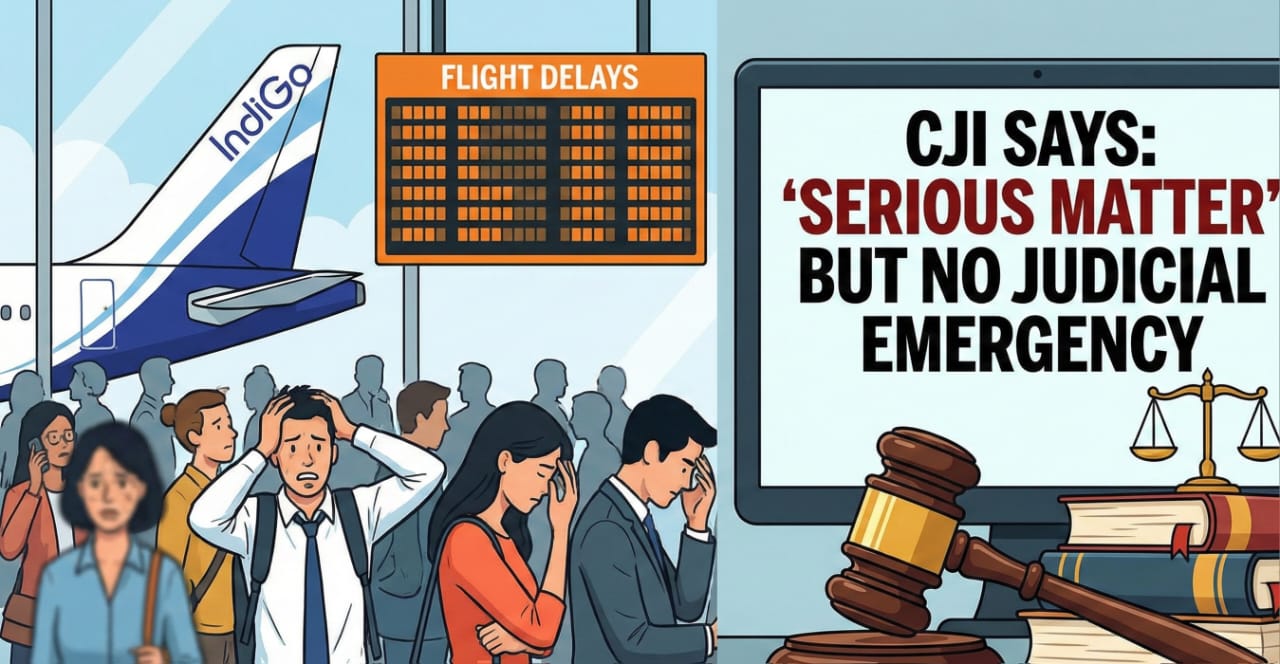
“Lakhs stranded, thousands of flights cancelled—yet Supreme Court holds back as government steps in”
The Supreme Court on Monday acknowledged the unprecedented aviation crisis gripping the nation but declined to intervene immediately, observing that the Centre has already swung into action. Chief Justice of India Surya Kant, heading a bench with Justice Joymalya Bagchi, called the situation “serious” while noting that lakhs of passengers remain stranded across airports nationwide.
The Scale of Disruption
The numbers are grim. Thousands of flights have been cancelled, and more than 250 services have also been dropped from Delhi and Bengaluru airports as a result of IndiGo. One airline cancellation has sparked a crisis in 95 airports, with over 2,500 flights delayed and passengers completely unaware of cancellations.
Between December 1 and 7, nearly 5.87 lakh bookings were cancelled, with refunds amounting to Rs 569.65 crore. The broader picture is even more sobering—from November 21 to December 7, refunds totaling Rs 827 crore were issued for cancelled reservations.
The human cost extends beyond mere inconvenience. Passengers have missed funerals, medical appointments, weddings, and court hearings. Airports have become a scene of total chaos in the way thousands of bags pile up at the gates and frustrated travelers camping out on the street without food to eat.
What CJI Said
When he filed an urgent appeal in court to advocate Narendra Mishra, CJI Surya Kant noted that “always thousands are stranded” and that some might be in serious need of a medical or work or medical emergency. But at this stage it seemed clear to him that this was not the time to take judicial action.
“The Government of India has taken cognisance of the issue. Timely steps appear to have been taken. We don’t see any urgency right now,” the Chief Justice observed. The court’s stance reflects confidence in the executive’s response rather than judicial paralysis.
Government’s Response
The Centre has been not idle. IndiGo will be processing returns for refunds without delay and the Ministry of Civil Aviation would require that it be no longer charged no rescheduling charges on affected passengers. The Directorate General of Civil Aviation has also issued show-cause notices to IndiGo’s CEO Pieter Elbers and the Accountable Manager, seeking explanations for the disruptions.
Aviation Minister K. Rammohan Naidu informed Parliament that the government has launched an inquiry and promised strict action against the airline. A DGCA-appointed panel is investigating the root causes of the operational collapse.
What Went Wrong?
The crisis, prompted by a lack of pilots to follow new Flight Duty Time Limitation Phase II rules, which took effect November 1, caused IndiGo to come under strain. It noted that the new regulations were crippling its crew planning and rostering systems and led to a catastrophic failure. Critics argue that as India’s largest carrier, IndiGo should have anticipated and prepared for these changes. The airline’s market dominance—controlling a significant chunk of domestic aviation—means its failures have outsized consequences for the traveling public.
What’s Next
While the Supreme Court has been pushed back, the Delhi High Court is directing a hearing for December 10 on a public interest lawsuit that seeks further support for passengers. Meanwhile, IndiGo continues to work to coordinate damage control operations, offering to deliver the remaining 4,500 misplaced bags in 36 hours and providing support to the operation in order to keep it safe.
For now, the message from India’s highest court is clear: the government is already on it, and unless the situation spirals further out of control, judicial intervention can wait. But for the lakhs still stranded, that’s cold comfort in a crisis that has already dragged on for too long.
Author Author
Swapnil Mishra is a student at The Legal School and a law graduate of LNCT University in Bhopal. studies corporate and commercial law with a strong interest. Through his writing, hopes to simplify, make practical, and make difficult legal concepts understandable. has experience in paralegal work, contract preparation, and legal research.