

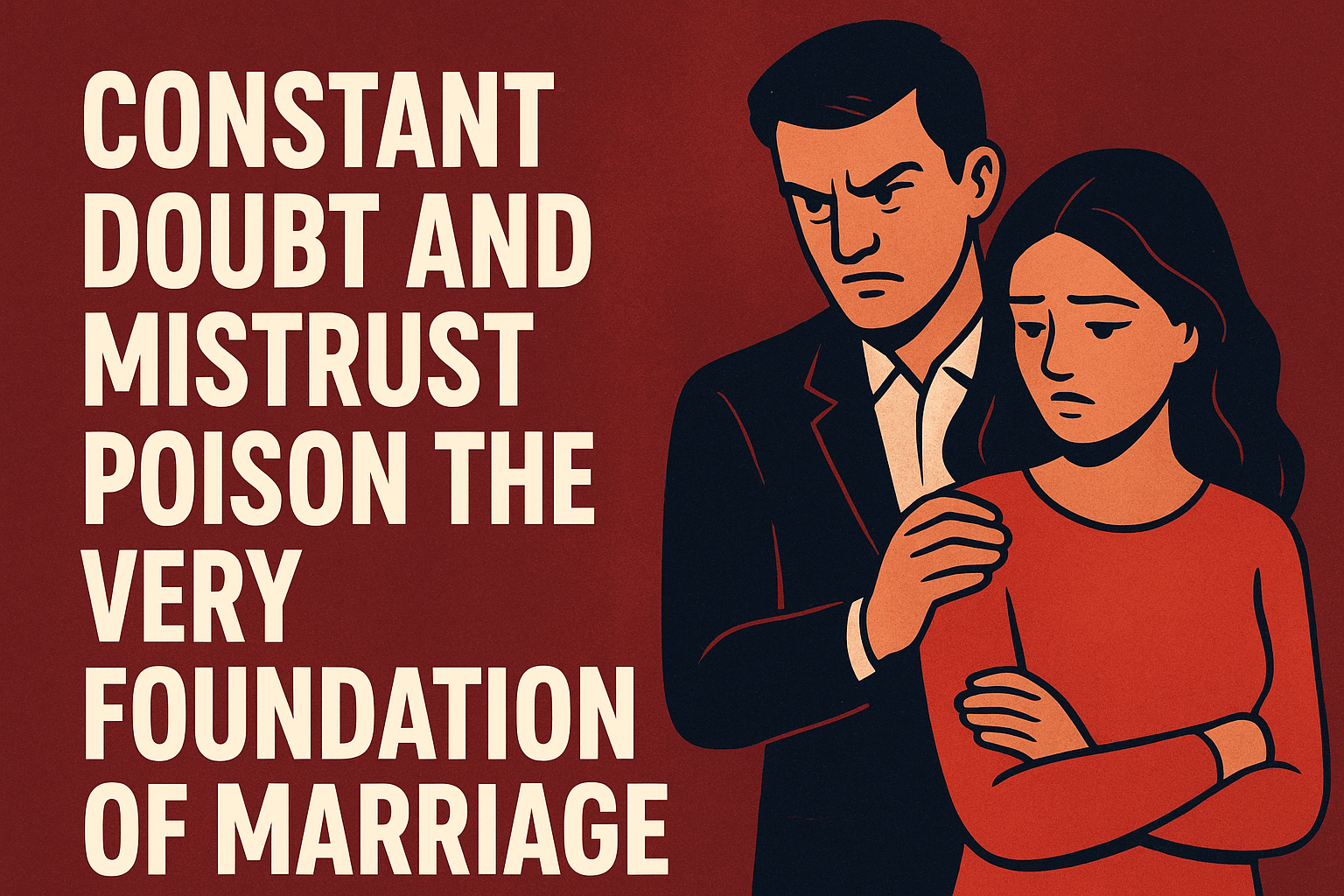
The Kerala High Court in its recent decision allowed the appeal, by wife- appellant, and set aside the judgment of Kottayam Family Court which refused to grant the divorce under section 10(1)(x) of the Divorce Act on the ground of mental cruelty suffered by the wife.
The High Court reinforces a crucial principle: marriage cannot be converted into a regime of surveillance, control and humiliation. Conduct, even if non-violent, destroys the Dignity, Autonomy and Mental peace of other, conduct must be recognized as cruelty and appropriate relief must be provided. The High Court after examination of evidence and documents on record dissolved the marriage on the ground of cruelty under above said section.
Facts in Brief
The appellant (wife) and respondent (husband) solemnized their marriage according to the rites and ceremonies of Christians in the year 2013 and had one child. During the period of their marriage wife worked as staff nurse in medical centre, kottayam and husband was employed abroad. Husband thereafter demanded her to resign her job and assured her that he will arrange a job for her in his place. Wife believed her husband and moved to abroad thereafter her husband developed a persistent suspicion about her fidelity, restricted her movements, forbid her from calling anyone in his absence and discouraged her form seeking employment and manhandled her also a few times. Wife filled a divorce petition in the Kottayam Family Court, which was rejected by the Court, wife appealed in the High Court.
Mental Cruelty as a Question of Degree
Mental cruelty in matrimonial jurisprudence can never be defined with exactitude. The courts have to apply a very elastic and broad approach while deciding cruelty. Cruelty can be intentional or unintentional, Mental or Physical, it is a question of fact and degree. Cruelty may be dependent on the facts and circumstances of each case. In this case “the continued mistrust of the husband creates an atmosphere of humiliation, fear and emotional suffering and such conduct makes it unreasonable to expect the wife to continue living with him and the wife is entitled to live with dignity and freedom through the remedy of divorce. The unfounded suspicion of a husband is a serious form of mental cruelty” court opinioned.
Policy and Social Implications
This decision signals to litigants, especially women that law recognizes the economic confinement as a form of matrimonial injury. It also sends a clear message to all the lower courts and family courts to have broader perspective, elastic approach and look beyond the discrete violence and examine the pattern of control and humiliation which erode autonomy, dignity and mental peace of other partner.
It also has broader social resonance as this judgment challenges the patriarchal norms where the economic restrictions are named as “family discipline” and “preserving reputation”. By calling out such type of practices as cruelty, the High Court pushes the legal and cultural baseline that marriage cannot be a license for domination.
Author
Aman Srivastava, Author, is an advocate practicing in Allahabad High Court and various sessions’ court of Uttar Pradesh, having keen interest and developing expertise in criminal law, constitutional law, family law and Service related matters.